Demolition contractors in Gilroy and South County, CA need more than an excavator and a dumpster. They need to know which air district governs your parcel, which city issues the permit, and how local soil and access conditions change the bid. Here's what that actually looks like on the ground, and what it should cost you in 2026.
Local Demolition Coverage Across Gilroy and South County
We work on teardowns, interior strip-outs, and site clearing throughout Gilroy, Morgan Hill, San Martin, and Hollister. That range matters here more than in most markets: Gilroy and Morgan Hill sit in Santa Clara County, while Hollister sits in San Benito County, and those two counties answer to different air quality regulators before a demolition permit can even be issued. More on that below.
Crews who've worked Glen Loma Ranch, Hecker Pass, and the older downtown Gilroy parcels know the difference between a lot with easy street access and one that needs a smaller excavator and hand demolition because of tight setbacks or neighboring fences. That's the kind of detail that shows up as a change order with an out-of-area crew and doesn't with a local one.
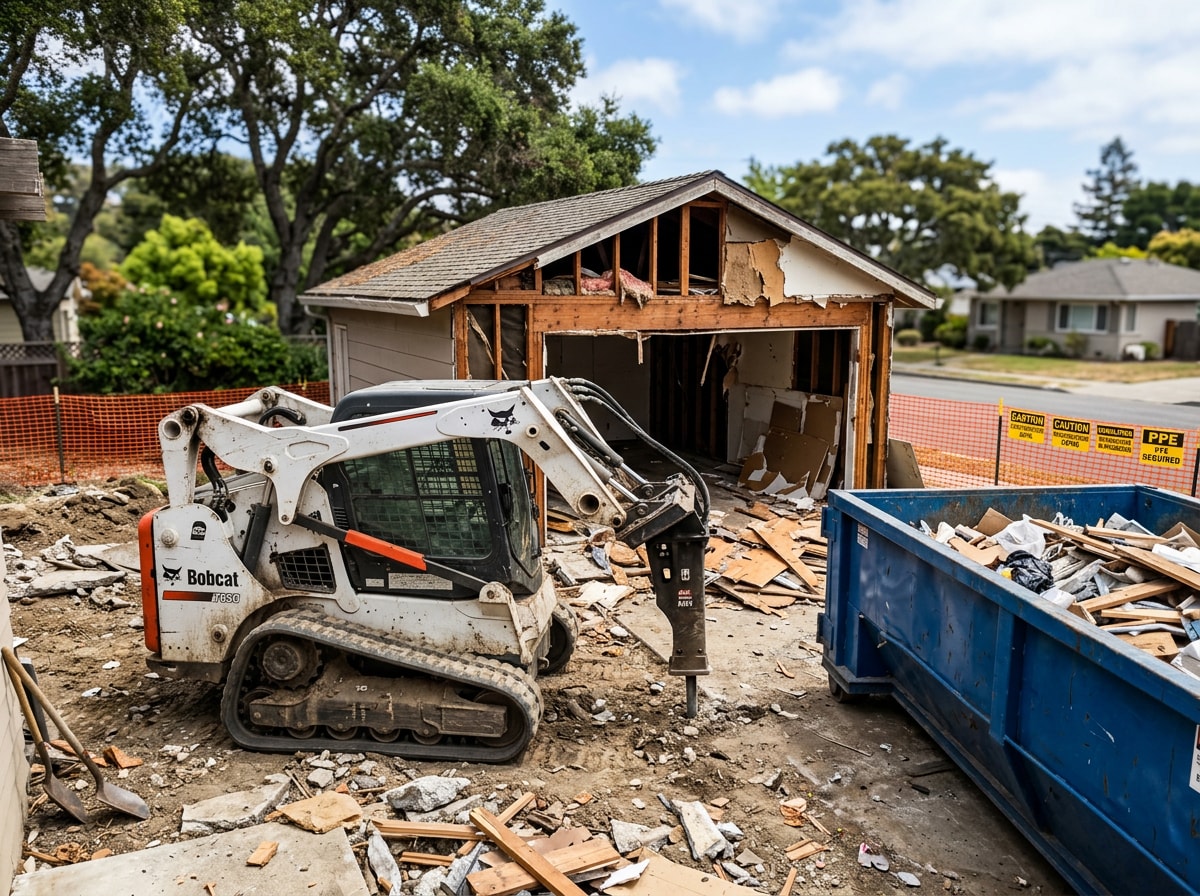
A full-service demolition contractor should also run the admin side: permit submission, utility disconnect scheduling, subcontractor coordination, and debris hauling, so you have one point of contact instead of five phone numbers. See our general contractor services if your demolition is step one of a larger rebuild, remodel, or addition.
What Our Demolition Services Cover
Most requests in Gilroy and South County fall into a few categories:
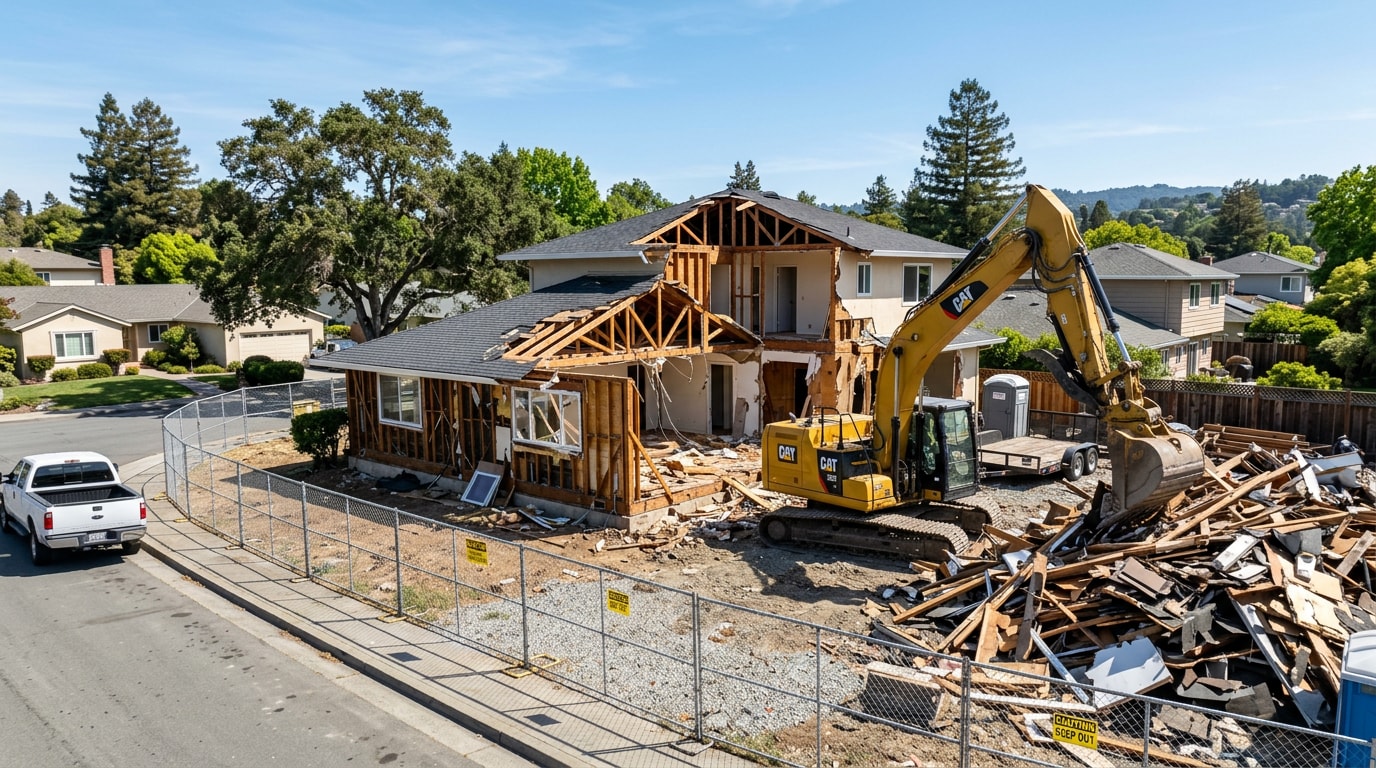
- Full structure demolition – single-family homes, outbuildings, agricultural structures, and small commercial buildings.
- Interior and selective demolition – gutting a kitchen, bathroom, or full interior ahead of a remodel.
- Site clearing and grading prep – clearing a redevelopment parcel or infill lot before new construction.
- Debris removal and hauling – sorting and hauling material to approved disposal and recycling facilities so the site is clean and inspection-ready.
If your project is a bathroom gut rather than a full teardown, our bathroom demolition service handles that scope specifically, and our general construction team can carry the project straight through to rebuild once the site is clear.
Licensing, Insurance, and the Permit Rules That Catch People Off Guard
Here's where a lot of demolition quotes in this market go wrong: they skip the regulatory layer entirely.
Licensing. California's C-21 Building Moving/Demolition Contractor license requires an application to the Contractors State License Board, four years of hands-on trade experience, passing scores on two state exams, and a $25,000 surety bond.
The C-21 classification authorizes a contractor to demolish, relocate, raise, lower, and structurally support buildings and other structures, including their foundations.
California law exempts work from licensing requirements only when the total contract price is under $1,000 and the project doesn't require a building permit, and in practice nearly all structural demolition requires a permit. Before you sign anything, run the contractor's number through the CSLB's online license check tool.
Safety standards. Demolition work carries all the hazards of standard construction, plus additional unknowns, which is why OSHA created a dedicated Subpart T demolition standard under 29 CFR 1926. Before any demolition can start, a competent person has to complete an engineering survey of the structure to check the condition of the framing, floors, and walls, and the risk of unplanned collapse. Ask to see that survey before crews mobilize.
Air district jurisdiction, and this is the part most guides miss. Gilroy, Morgan Hill, and San Martin sit in Santa Clara County, under the Bay Area Air Quality Management District. BAAQMD requires notification at least 10 business days before any demolition, regardless of whether asbestos is present, though residential buildings of four or fewer units can notify as little as 72 hours in advance with an added fee. Hollister, by contrast, sits in San Benito County, which falls outside BAAQMD entirely. San Benito County is covered by the Monterey Bay Air Resources District, along with all of Monterey and Santa Cruz counties. That means a Hollister teardown and a Gilroy teardown file their pre-demolition notifications with two completely different agencies, on two different timelines, and a contractor who only knows the BAAQMD process can delay a Hollister project by weeks.
2026 Demolition Cost Guide for Gilroy and South County
Pricing swings more here than national cost calculators suggest, mostly because of Bay Area labor rates, dump and tipping fees, and the asbestos surveys common in homes built before the 1980s. The ranges below reflect what local crews typically quote; your exact number depends on square footage, access, and what the asbestos survey turns up.
| Project Type | Typical 2026 Range | Local Cost Drivers |
|---|---|---|
| Interior/selective demolition | $3–$10 per sq. ft. | Labor rates, material sorting and recycling |
| Detached structure (garage/shed) | $4,000–$10,000 | Dump/tipping fees, site access |
| Full house teardown | $15,000–$35,000+ | Asbestos survey, haul distance, lot access |
These are planning ranges, not quotes. Request a free estimate and we'll walk the site before giving you a number tied to your actual structure and jurisdiction.
How the Demolition Process Works
A compliant demolition generally runs through the same sequence, whether it's a Gilroy garage or a Hollister farmhouse:
- Site assessment and engineering survey – confirms structural condition and collapse risk.
- Asbestos survey – required before most permits can be issued, regardless of the building's age.
- Permitting and air district notification – filed with the city and the correct air district (BAAQMD or MBARD, depending on the county).
- Utility disconnection – electric, gas, water, and sewer lines capped or shut off before work begins.
- Demolition execution – mechanical or manual, depending on structure size and site constraints.
- Debris hauling and site grading – material sorted for disposal or recycling, site left graded and clean.
If the demolition is clearing the way for an addition or a new accessory unit, our residential additions and ADU construction teams can pick up the project the day the lot is cleared, no gap between crews. For a broader look at what to plan for before breaking ground in this region, see our guide on what to know before you build in the Santa Cruz Mountains in 2026.
We've coordinated this exact handoff on parcels across Gilroy and South County, and the projects that stay on schedule are the ones where the air district notification goes in before the demo permit application, not after.
Ready to move forward? Get a free estimate and we'll confirm your jurisdiction, permit requirements, and a realistic cost range before any equipment shows up. You can also browse our full range of services from our homepage if your project involves more than demolition.
FAQ
What are the qualifications of a good demolition contractor?
A qualified demolition contractor holds an active C-21 license from the CSLB, carries full liability insurance and workers' compensation, and maintains a clean safety and environmental disposal record. Check the license status yourself through the CSLB's license lookup tool before signing a contract.
What is the demolition process?
It follows six steps in order: engineering survey, asbestos survey, permitting and air district notification, utility disconnection, demolition execution, and debris hauling with final grading. Skipping or reordering these steps is what causes most permit delays and safety citations.
Do I need a permit to demolish a house in California?
Yes. Nearly all structural demolition requires a city or county demolition permit, plus an asbestos survey regardless of the building's age. In Gilroy, Morgan Hill, and San Martin, you'll also need to notify BAAQMD; in Hollister, you'll notify MBARD instead.
How much does house demolition cost in Gilroy and South County?
Interior demolition typically runs $3–$10 per square foot, detached structures like garages run $4,000–$10,000, and a full house teardown generally falls between $15,000 and $35,000 or more, depending on access, haul distance, and what the asbestos survey finds.
Do I need an asbestos survey before demolishing a building in California?
Yes, in almost every case. Both BAAQMD and MBARD require an asbestos survey and a pre-demolition notification before a permit is finalized, even when the building is not expected to contain asbestos.
Which air district covers my property, BAAQMD or MBARD?
If your property is in Santa Clara County (Gilroy, Morgan Hill, San Martin), it falls under BAAQMD. If it's in San Benito County (Hollister), it falls under the Monterey Bay Air Resources District instead. Confirm with your contractor before filing, since the notification windows and forms differ.